Prayer Flags
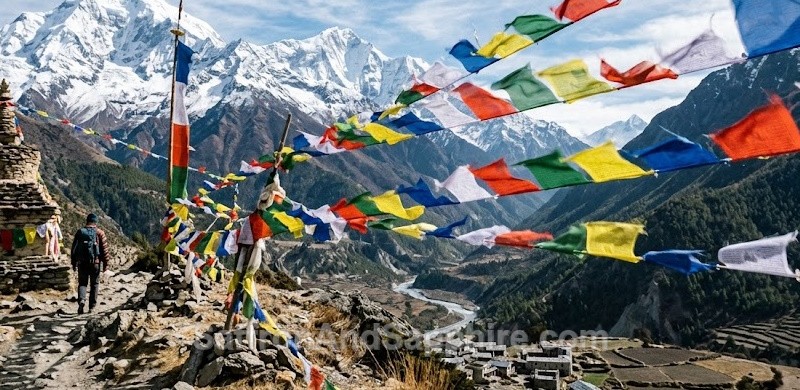
Tibetan Prayer Flags - €8.99
Typically found in Tibetan areas are the many Prayer Flags that decorate monasteries, houses and even mountain passes. It is believed that the special blessing power of the mantras printed on them is spread all over the world by the wind. The tradition stems from pre-Buddhist traditions in Tibet, just as the so-called Wind horse which is often found on them - but other Tibetan Symbols included.
In the West are used in gardens, internal rooms, outdoor gardens, prayer and meditation rooms, and anywhere that our spirit feels the need, symbolising peace and quiteness.
Tibetan Dorje of Vajra
The Vajra is a small Buddhist ritual object having five or nine prongs at each end, that bend inward to form a rounded enclosure. It symbolises the indestructible nature of the supreme truth.
Used with the Tibetan Bell, the vajra also symbolises compassion and the male, while the bell or ghanta symbolises wisdom and the female. (source: AGNSW). In Mahayana Buddhism the term vajra relates to states of meditation known as samadhi.
Vajra is a Sanskrit name, it is translated into Tibetan with two words, do and je (pronounced dorje). In the Indian Vedic literature, it is the sceptre of the god Indra, like a lightning bolt.
Small - 7cm x 1.5cm
Medium - 10cm x 2cm
Typically found in Tibetan areas are the many Prayer Flags that decorate monasteries, houses and even mountain passes. It is believed that the special blessing power of the mantras printed on them is spread all over the world by the wind. The tradition stems from pre-Buddhist traditions in Tibet, just as the so-called Wind horse which is often found on them - but other Tibetan Symbols included.
In the West are used in gardens, internal rooms, outdoor gardens, prayer and meditation rooms, and anywhere that our spirit feels the need, symbolising peace and quiteness.
Tibetan Dorje of Vajra
The Vajra is a small Buddhist ritual object having five or nine prongs at each end, that bend inward to form a rounded enclosure. It symbolises the indestructible nature of the supreme truth.
Used with the Tibetan Bell, the vajra also symbolises compassion and the male, while the bell or ghanta symbolises wisdom and the female. (source: AGNSW). In Mahayana Buddhism the term vajra relates to states of meditation known as samadhi.
Vajra is a Sanskrit name, it is translated into Tibetan with two words, do and je (pronounced dorje). In the Indian Vedic literature, it is the sceptre of the god Indra, like a lightning bolt.
Small - 7cm x 1.5cm
Medium - 10cm x 2cm

|

Also in: Meditation & Relaxation
 |  |  |  |  |
 |  |  |  |  |
 |  |  |  |  |